
A Traveler's Journey · 7 Destinations · 1 Lifetime
Seven Wonders of the World
Close your eyes. Pack your soul. We're about to journey across continents, centuries, and civilizations — one wonder at a time.
Before We Begin…
Imagine standing at the edge of the world. The wind carries whispers of ancient kings. The stones beneath your feet remember a thousand years. You are not just a tourist — you are a witness to humanity's greatest achievements.
In 2007, over 100 million people voted and declared these 7 New Wonders of the World. Each one tells a story. Each one will take your breath away. And if these inspire your wanderlust, don't miss our picks for the 10 best travel destinations in the world for 2026. Let's go — together.
The Great Wall of China 万里长城 · The Long Wall of 10,000 Li
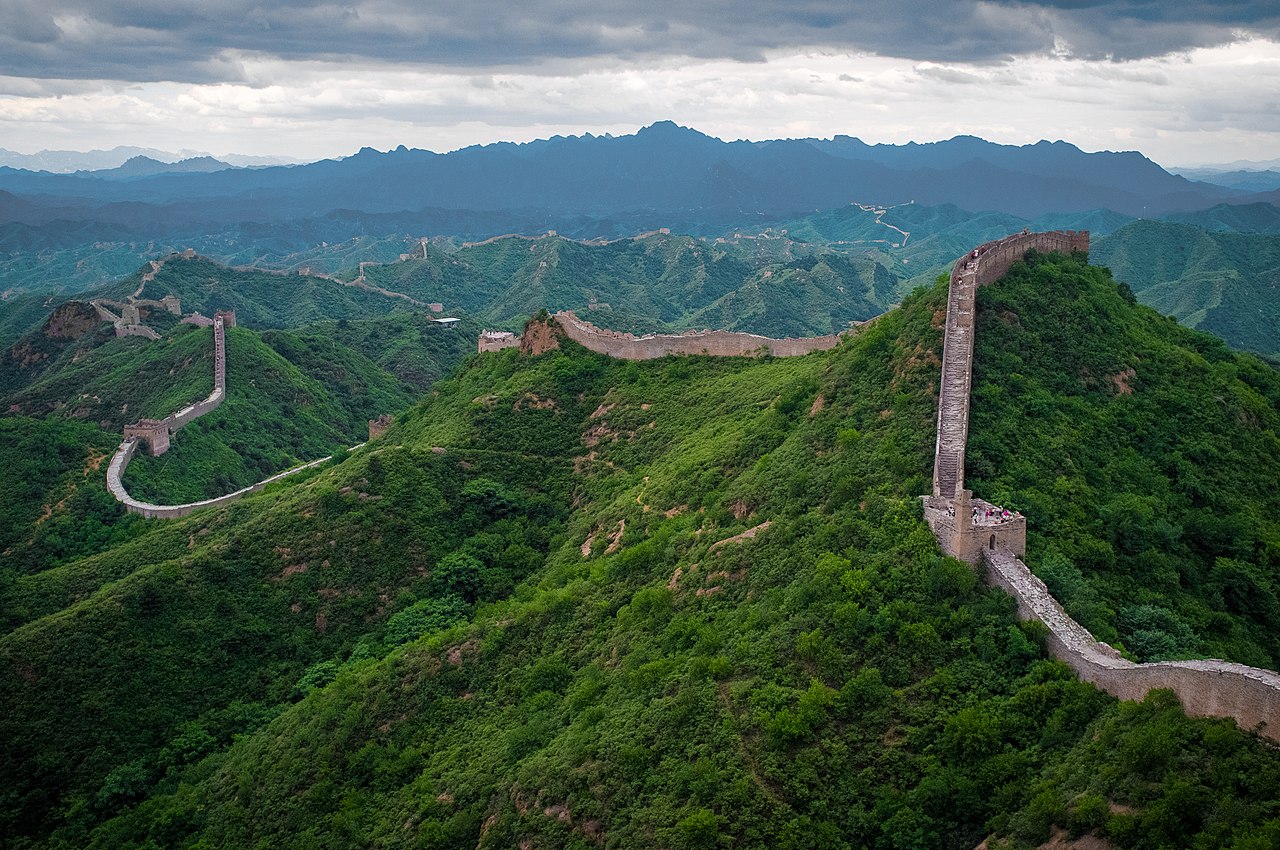
Jinshanling Section, Hebei Province, China
You wake up before dawn. The air is thin, cold, and carries the smell of pine resin. As the first gray light seeps over the mountains of Hebei Province, you place your hand on a stone wall — and realize that stone was placed here by a soldier who died over 2,000 years ago.
The Great Wall of China is not just a wall. It is a dragon made of stone, stretching 21,196 kilometers across mountains, deserts, and plains. Emperors built it. Millions of workers — many of whom were buried within it — gave their lives for it. And today, you're walking on top of the most audacious construction project in human history.
"He who has not climbed the Great Wall is not a true man." — Mao Zedong
The best section to visit is Mutianyu — restored, dramatic, and far less crowded than Badaling. Take the cable car up, walk the ramparts in the morning mist, and for a surreal moment, imagine being a Ming Dynasty soldier scanning the horizon for Mongol cavalry. The watchtowers loom every few hundred meters. Inside, the wind howls like it has always howled.
In autumn, the wall turns gold — surrounded by flaming maples and persimmon trees. In winter, it's ghostly white. In summer, it's alive with tourists, vendors selling jade, and the faint echo of history. Every season reveals a different wall, a different feeling.
- Visit Mutianyu over Badaling — far fewer crowds, equally dramatic
- Go at sunrise: golden light, cool air, and almost no tourists
- Best time: September–November for autumn colours and clear skies
- Wear comfortable shoes — the ancient steps are uneven and steep
- Book a Beijing day-tour package for easiest transport
Machu Picchu The Lost City of the Incas · 2,430m Above the World

Machu Picchu, Cusco Region, Peru · 2,430m elevation
The train pulls into Aguas Calientes just as the clouds swallow the mountain peaks. You can't even see Machu Picchu yet — it hides, like a legend should. The next morning, you take the 30-minute bus ride up the serpentine road, your heart hammering, your breath short from altitude. And then, at the Sun Gate — Inti Punku — the mist parts. And there it is.
Machu Picchu hits you like a dream you've had before. A city of 150 stone structures, perfectly fitted without a single drop of mortar, perched on a ridge between two mountains at 2,430 meters above sea level. The Incas built it around 1450 AD — then abandoned it less than a century later when the Spanish conquistadors arrived. It lay forgotten for 400 years, hidden in cloud forest, until Hiram Bingham rediscovered it in 1911.
Standing here, you feel it — the Incas didn't just build a city. They built an argument against time. And time is losing.
Walk the agricultural terraces where potatoes and maize once grew. Find the Intihuatana Stone — the "Hitching Post of the Sun" — where Inca priests tied the sun to prevent it from disappearing. Watch the llamas graze casually between ancient temples as if they own the place. They kind of do.
For the brave: hike Huayna Picchu, the dramatic peak that looms behind the city. The trail is steep, thrilling, and slightly terrifying. At the top, 400 meters above Machu Picchu itself, you will feel like you are standing at the edge of the universe.
- Book entry tickets months in advance — daily visitor limits are strict
- Stay overnight in Aguas Calientes to catch the 5:30am first bus
- Best time: May–October (dry season) for clear mountain views
- Altitude sickness is real — acclimatise 1–2 days in Cusco first
- Huayna Picchu requires a separate ticket — book it simultaneously
Petra The Rose-Red City · Half as Old as Time

Al-Khazneh (The Treasury), Petra, Ma'an Governorate, Jordan
You enter through the Siq — a narrow, mile-long gorge where the walls of rose-pink sandstone rise 80 meters on both sides, blocking out the sky. The passage twists and turns. Your footsteps echo. Bedouin vendors sell tea and amber necklaces. Carved channels run along the walls where the Nabataeans once piped water across the desert.
Then the Siq opens. And there it is. Al-Khazneh — The Treasury — a 40-meter-tall facade carved directly into the living rock, as precise and elaborate as anything built with scaffolding and tools. Rose-red columns. Greek friezes. An urn at the top that locals believe holds Pharaoh's treasure. The light here turns the stone from blush pink to copper gold depending on the hour.
"Match me such marvel, save in Eastern clime — a rose-red city half as old as time." — John William Burgon
Petra was the capital of the Nabataean Kingdom — a civilization of ingenious desert traders who carved their entire city from sandstone cliffs around 300 BC. The city held 20,000 people. It had a sophisticated water system, temples, tombs, a Roman colonnade street, and a Byzantine church. It was lost to the Western world for over 500 years until Swiss explorer Johann Ludwig Burckhardt rediscovered it in 1812 — by disguising himself as an Arab pilgrim. If ancient desert civilizations move you, you'll also want to explore the Pyramids of Giza — another immortal testament to human ambition carved from desert stone.
Stay for Petra By Night — the path to the Treasury lit by 1,500 candles, and Bedouin music drifting under the stars. There are no words. Only goosebumps.
- Wear sturdy shoes — you will walk 10+ km inside Petra
- Start at 6am to beat the heat and the tour groups
- Buy a 2–3 day Petra pass — one day is genuinely not enough
- Don't miss the Monastery (Ad Deir) — 800 steps but absolutely worth it
- Petra By Night (Mon/Wed/Thu) — book ahead, it sells out fast
The Colosseum Colosseo · Rome's Eternal Arena

The Colosseum, Rome, Italy · Completed 80 AD
You step off the Metro at Colosseo station and there it is — 50,000 tons of travertine marble and Roman concrete, rising 48 meters against the Roman sky. No photograph prepares you. The Colosseum simply overwhelms. It is not a ruin. It is a survivor.
Emperor Vespasian began building it in 70 AD. His son Titus completed it in 80 AD. For 400 years, 50,000 to 80,000 spectators roared inside while gladiators battled lions, bears, elephants, and each other. The arena floor was wooden, covered in sand — the Latin word for sand, harena, gives us the word "arena." Beneath the floor was the hypogeum: a labyrinth of tunnels, cages, and elevators where men and animals awaited their fate.
"While the Colosseum stands, Rome shall stand; when falls the Colosseum, Rome shall fall; and when Rome falls, the world." — The Venerable Bede, 8th Century
Walk the upper tiers and look down at the exposed hypogeum below — those dark tunnels where gladiators spent their final moments. Feel the weight of 2,000 years. Romans attended the games for free; the emperor provided bread and spectacle to keep the populace happy. An empire built on entertainment and fear.
Book your tickets in advance (the queues are legendary) and visit at golden hour when the stone glows amber and the Forum Romanum stretches behind it like a dream of antiquity.
- Book online at colosseo.it — the walk-up queue can be 2+ hours
- The combo ticket includes the Roman Forum and Palatine Hill
- Visit at 9am or after 4pm for the best light and thinner crowds
- The underground hypogeum tour requires a separate booking
- Best time to visit Rome: April–June and September–October
Taj Mahal تاج محل · A Monument Carved From Love
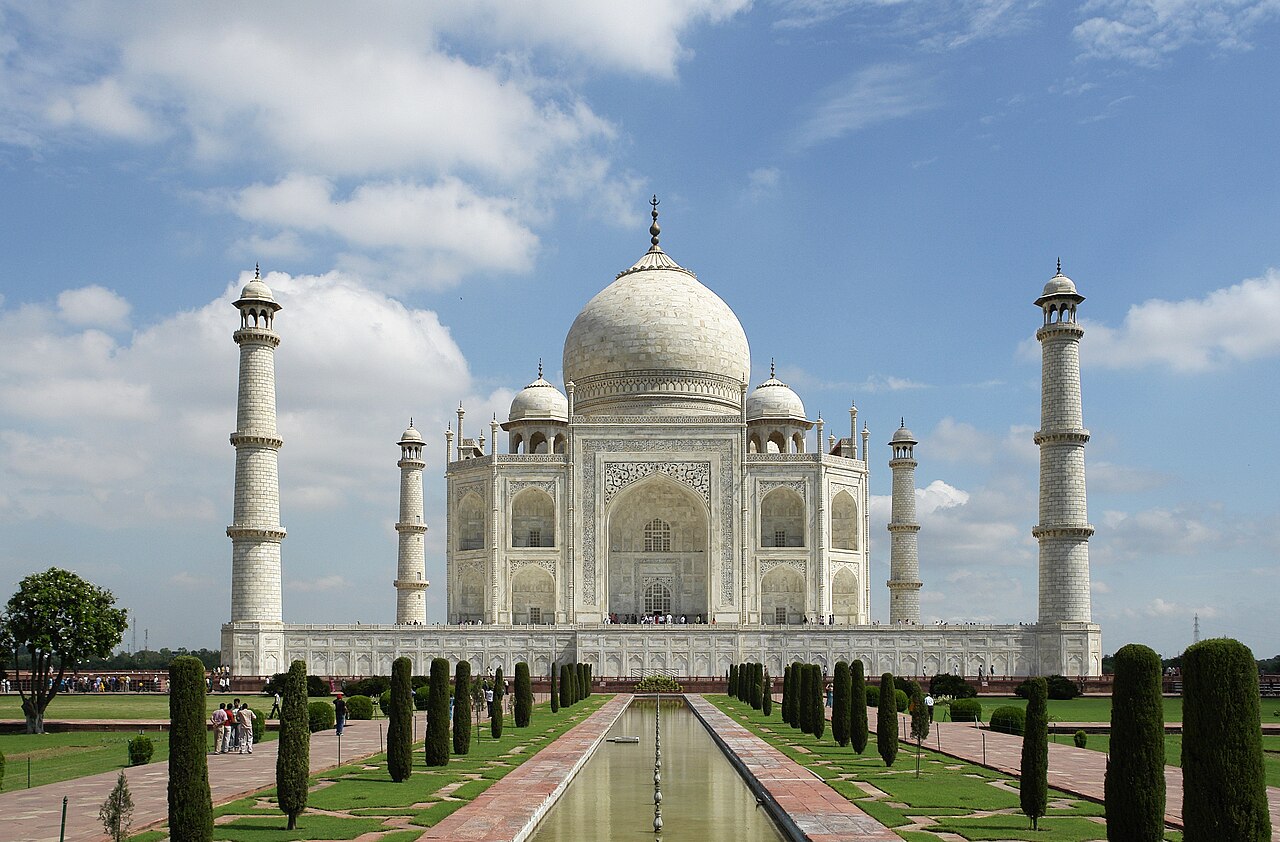
Taj Mahal, Agra, Uttar Pradesh, India · Built 1632–1653 AD
You arrive at sunrise — before the heat, before the crowds. The gate of red sandstone frames a sliver of white in the distance. You step through. And the Taj Mahal materializes before you like a vision too perfect to be real — floating above its long reflection pool, impossibly white, impossibly symmetrical, impossibly beautiful.
Mughal Emperor Shah Jahan built the Taj Mahal for his wife, Mumtaz Mahal, who died in 1631 during childbirth. He was so devastated that his hair reportedly turned white overnight. Over the next 22 years, 20,000 artisans from across the empire constructed this mausoleum from pure white Makrana marble, inlaid with 28 types of precious and semi-precious stones — carnelian, jasper, jade, turquoise, lapis lazuli — forming flowers and calligraphy across every surface. Curious about every detail before you visit? Read our complete Taj Mahal history & facts guide for everything you need to know.
"Let the splendour of diamond, pearl and ruby vanish like the magic shimmer of the rainbow. Only let this one teardrop, the Taj Mahal, glisten spotlessly bright on the cheek of time." — Rabindranath Tagore
Walk barefoot inside the cool marble interior (shoes must be removed or covered). Find the cenotaphs of Shah Jahan and Mumtaz — though their real graves lie in the vault below. Notice how the minarets lean very slightly outward — a deliberate design choice, so that if they ever fell in an earthquake, they would fall away from the main dome, not onto it. Engineering. Love. Art. All three, inseparable.
Come back at full moon if you can. The Taj Mahal glows silver-white in moonlight, and the gardens fill with a silence that feels sacred.
- Arrive at opening time (30 min before sunrise) for the iconic reflection photo
- The Taj Mahal is closed every Friday for prayers — plan accordingly
- Best time: October–March for cool weather and clearest skies
- Moonlight viewing is available 5 nights around each full moon
- Hire an official ASI guide — the stories they tell transform the visit
Chichen Itza At the Mouth of the Well of the Itza · Maya Masterpiece

El Castillo (Temple of Kukulcán), Chichen Itza, Yucatan, Mexico
The Yucatán Peninsula heat is ferocious. The jungle presses in from all sides, buzzing and alive. You follow the path through the trees and step into the great plaza — and El Castillo rises before you like a mathematical dream: a perfect pyramid, 30 meters high, with 365 steps (one for each day of the year), nine terraced platforms (each representing a level of the Maya underworld), and four stairways pointing to the four compass directions.
The ancient Maya built Chichen Itza between the 9th and 12th centuries AD and created a city of extraordinary astronomical precision. Every spring and autumn equinox, the setting sun casts a shadow on the northern staircase of El Castillo that creates the illusion of a serpent undulating down the steps — the feathered deity Kukulcán descending to Earth. Thousands gather twice a year to witness this 1,000-year-old light show.
The Maya didn't just build a temple. They built a calendar, an observatory, and a prayer — all in one structure.
Walk to the Great Ball Court — the largest ancient ball court in the Americas, where players struck a rubber ball with their hips in a game believed to be a ritual reenactment of the cosmic struggle between day and night. Losing wasn't just embarrassing. Archaeological evidence suggests it could be fatal. Carved reliefs show decapitations. The acoustics are extraordinary: a handclap at one end produces a clear echo at the other, 150 meters away.
Visit early morning when the crowds are thin and the stone is still cool. Bring water. Bring sunscreen. Bring wonder.
- Arrive at 8am opening — crowds dramatically thin before 10am
- Best time: December–April for cooler, drier Yucatan weather
- Bring plenty of water and high-SPF sun protection
- Book the spring equinox visit (March 20–21) months in advance
- Combine your visit with a swim at nearby Cenote Ik-Kil
Christ the Redeemer Cristo Redentor · Arms Open to the World
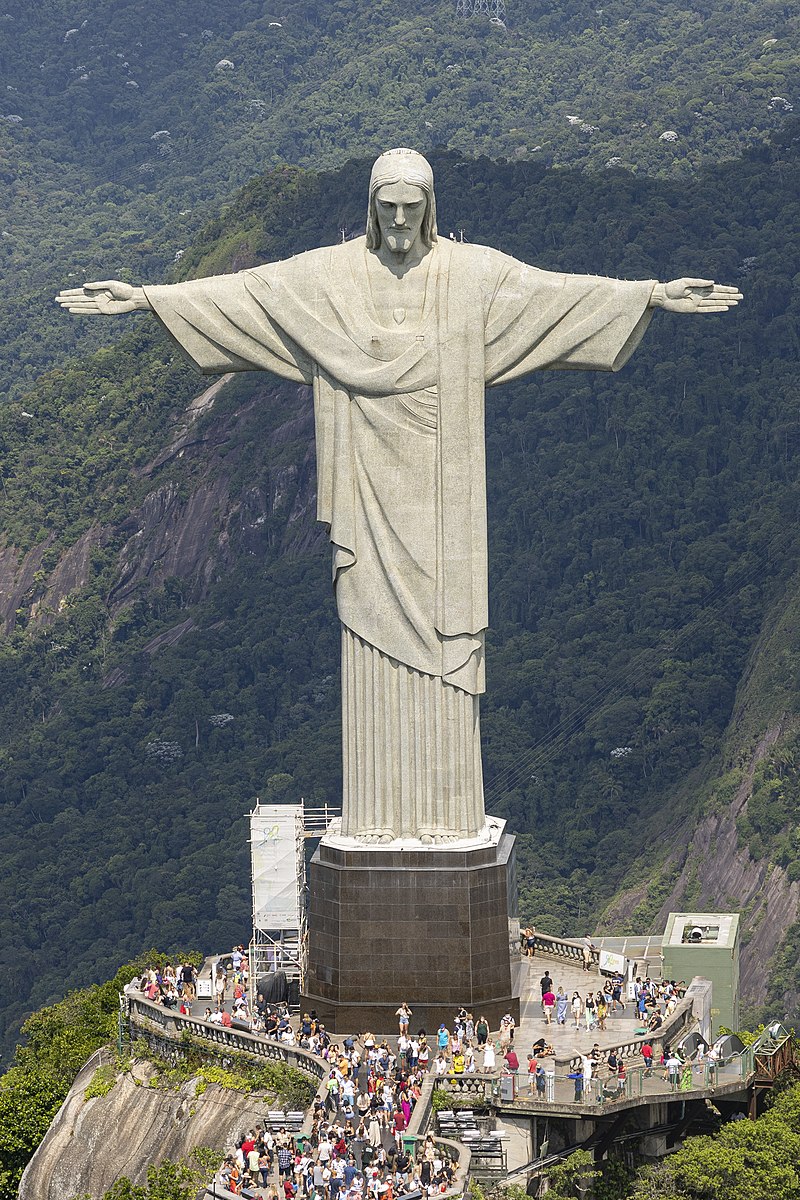
Cristo Redentor, Corcovado Mountain, Rio de Janeiro, Brazil
The cogwheel train climbs through Atlantic rainforest, the canopy closing over you like a green tunnel. Howler monkeys call in the distance. Then the train emerges at the summit — 710 meters above sea level — and you turn around. Rio de Janeiro spreads below you in every direction: the glittering curves of Copacabana and Ipanema beaches, the green mass of Tijuca Forest, the sugar loaf mountain punching up from the bay, and beyond it all, the deep blue Atlantic. And above it all: Christ.
Cristo Redentor stands 30 meters tall (38 meters including the pedestal), arms stretched 28 meters wide in a gesture of eternal welcome. Brazilian engineer Heitor da Silva Costa designed it. French sculptor Paul Landowski brought it to life. It was completed in 1931, built from reinforced concrete and soapstone tiles — each tile made by hand by women in Rio who inscribed their names on the back, so their names would be close to God forever.
Standing beneath those outstretched arms, you understand why 1.8 million people voted this into the Seven Wonders. It doesn't just overlook a city. It embraces an entire world.
Go at sunset. The sky burns orange and pink over the Atlantic. The city below flickers to life, a million lights against the dusk. And Christ the Redeemer glows white, arms wide, as if holding the whole spectacular moment in place. If you're planning a Middle East stopover before your Brazil trip, don't miss Ferrari World Abu Dhabi 2026 — a thrilling contrast to ancient wonders.
Bring a light jacket — the summit wind is cool even on hot Rio days. And bring your widest eyes. You'll need them.
- Book the cogwheel train (Trem do Corcovado) tickets online in advance
- Go at sunset for golden light — or sunrise to avoid all the crowds
- Bring a light jacket — the summit wind is cool even on hot Rio days
- Best time to visit: May–October for clearer skies and less rain
- The statue is often hidden in cloud — check weather forecasts and stay flexible
✦ Frequently Asked Questions — 7 Wonders of the World
The Journey Never Really Ends
Seven wonders. Seven stories. Seven places where human beings looked at the world and decided to add something extraordinary to it — out of love, out of power, out of faith, out of ambition. These are not just tourist sites. They are proof of what we are capable of.
Which wonder calls to you? Wherever you go — go soon. Go with open eyes, an open heart, and the understanding that you are about to become part of a story that started long before you, and will continue long after. Ready for your next adventure? Explore hidden gem destinations across Europe or plan a visit to the iconic Statue of Liberty — both waiting to be your next story.
Written by Brijesh Patel · Founder of Explor N Places · Passionate traveler, storyteller & travel writer
✦ Share this journey if it moved you ✦